Teeth grinding and jaw clenching are among the most damaging and difficult habits to stop because they happen without conscious thought. Bruxism the involuntary clenching, grinding, or gnashing of teeth that affects millions of patients wears down tooth enamel, fractures teeth, generates chronic jaw pain, and drives the headaches and migraines that make daily life uncomfortable. For patients who have tried mouth guards and traditional treatments without finding lasting relief, Botox for bruxism offers a clinically effective solution that targets the grinding and clenching at its muscular source. At Dante Gonzales Orthodontics, we help patients suffering from bruxism understand how Botox injections work, what results they can expect, and whether this treatment is right for their specific case.
What Is Bruxism?
Bruxism is characterized by the involuntary clenching, grinding, or gnashing of teeth and is classified into two distinct types: awake bruxism, which occurs during waking hours often in response to stress and anxiety, and sleep bruxism, which happens unconsciously during sleep. Many patients are unaware they grind their teeth at night until a dentist identifies the damage to their tooth enamel during a routine examination.
Chronic stress, anxiety, sleep disorders, sleep apnea, heavy caffeine or alcohol use, and certain medications are the primary causes and risk factors for bruxism. The condition is more commonly referred to simply as teeth grinding or jaw clenching, but its consequences extend far beyond the teeth themselves. Bruxism leads to severe jaw pain, headaches, migraines, damaged tooth enamel, chipped teeth, and temporomandibular disorders that progressively worsen without effective treatment.
Common Signs of Bruxism
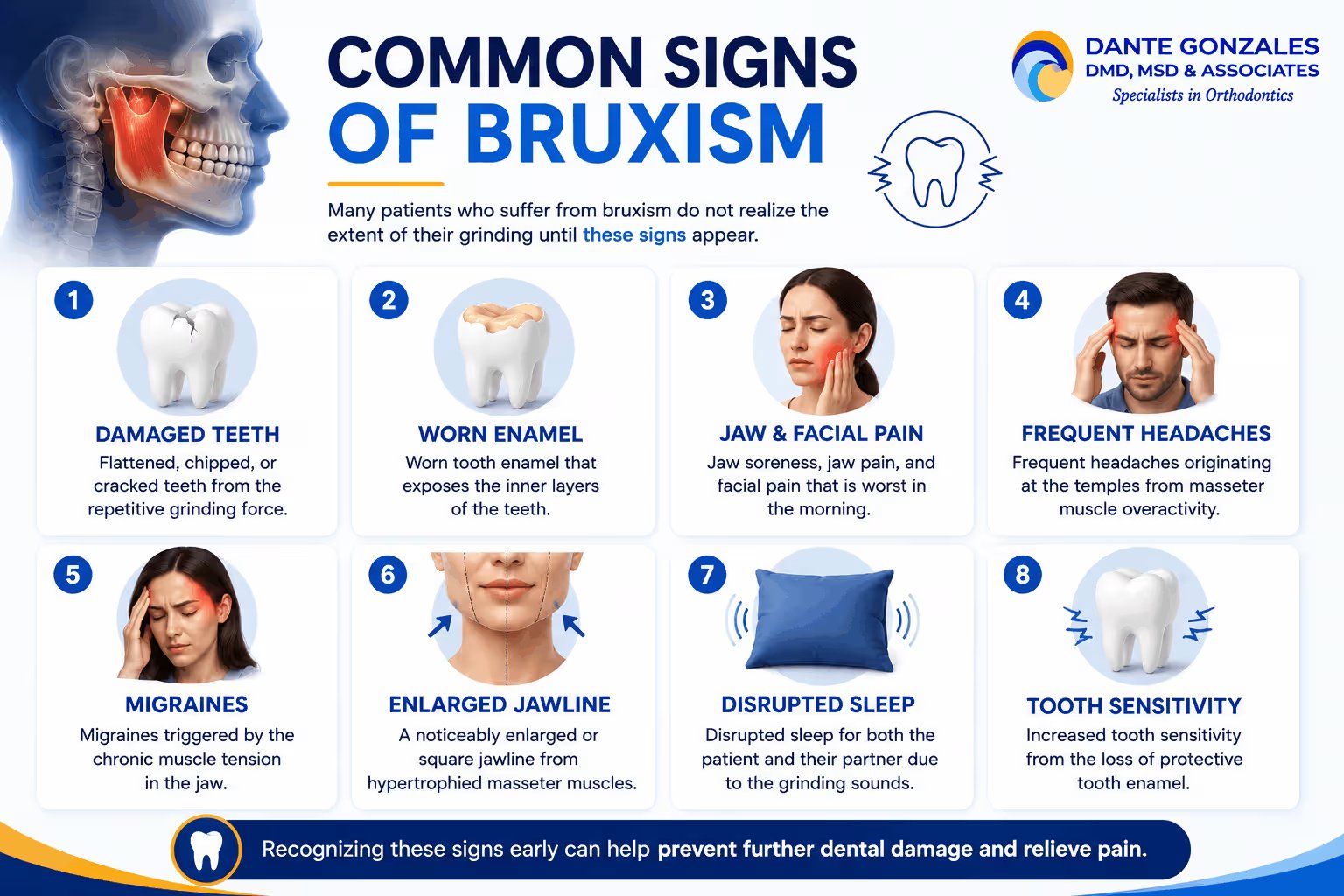
Many patients who suffer from bruxism do not realize the extent of their grinding until the following common signs appear:
- Flattened, chipped, or cracked teeth from the repetitive grinding force
- Worn tooth enamel that exposes the inner layers of the teeth
- Jaw soreness, jaw pain, and facial pain that is worst in the morning
- Frequent headaches originating at the temples from masseter muscle overactivity
- Migraines triggered by the chronic muscle tension in the jaw
- A noticeably enlarged or square jawline from hypertrophied masseter muscles
- Disrupted sleep for both the patient and their partner due to the grinding sounds
- Increased tooth sensitivity from the loss of protective tooth enamel
How Does Botox for Bruxism Work?
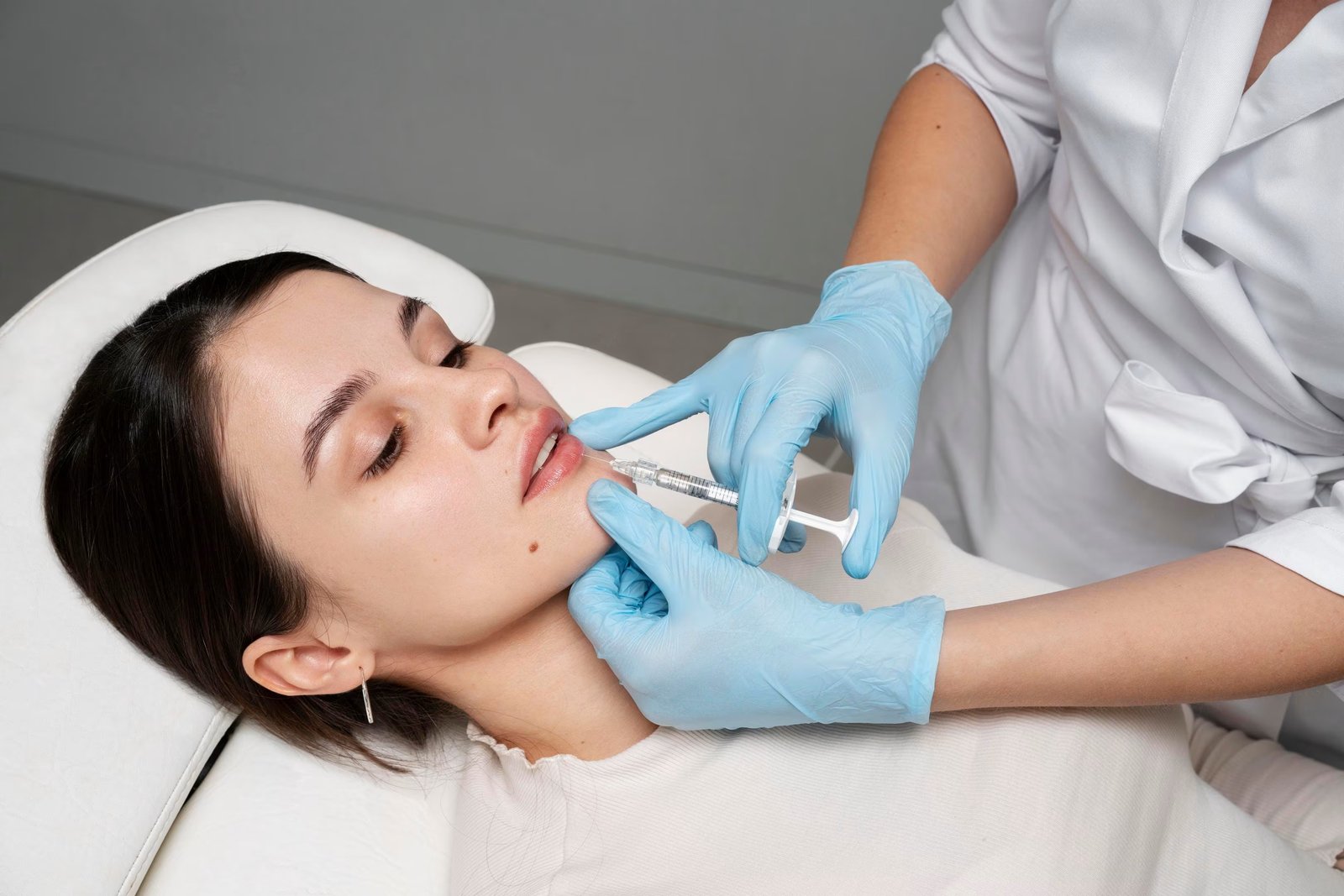
Botox for bruxism works by using botulinum toxin to temporarily block nerve signals to the masseter muscle the large, powerful chewing muscle on each side of the jaw that is responsible for the force behind teeth grinding and jaw clenching. When botulinum toxin is injected into the masseter muscle, it reduces muscle contraction strength without eliminating jaw function for everyday activities like talking, chewing, and eating. The result is a significant reduction in the involuntary grinding and unconscious grinding that causes dental damage and jaw pain.
Botulinum toxin injections have been shown to significantly reduce the intensity of clenching and grinding by calming the overactive masseter muscles, leading to pain relief and improved jaw function. The procedure is minimally invasive, completed entirely in the dental chair, and requires no recovery time. Most patients leave the appointment able to return to their normal daily activities immediately.
Which Muscles Are Injected?
Botox injections for bruxism are primarily administered into the masseter muscle on each side of the jaw, with some patients also receiving injections into the temporalis muscles to address the full scope of teeth grinding and jaw clenching force. The masseter muscle is the most affected jaw muscle in bruxism patients its repeated overactivation during grinding causes the muscle to enlarge over time, creating the square jawline appearance that many patients notice alongside their painful symptoms. Reducing masseter muscle activity with Botox injections not only relieves jaw pain and grinding but can also naturally slim the jawline over successive treatments.
How Quickly Does Botox Work for Bruxism?
The effects of Botox for bruxism typically begin to take effect within 1 to 3 days after injection, with full results often seen within two weeks. Patients commonly report fewer headaches, reduced jaw soreness, and noticeably less clenching intensity within the first week of treatment. Clinical studies indicate a high rate of patient satisfaction with Botox treatment for bruxism, with an overall success rate between 70% and 90% making it one of the most consistently effective treatment options for patients who have not responded adequately to traditional treatments.
How Long Does Botox for Bruxism Last?
The effects of Botox for bruxism can last for 3 to 6 months before the botulinum toxin gradually dissipates and muscle activity returns. When symptoms return, repeat Botox injections restore the relief. Many patients find that with consistent treatment cycles, the severity of their bruxism decreases over time as the masseter muscle reduces in bulk from reduced overactivation. Regular treatment every 3 to 6 months is the standard maintenance schedule recommended for patients with chronic bruxism who respond well to Botox injections.
Botox for Bruxism vs. Mouth Guards: A Direct Comparison
Both Botox injections and mouth guards are dentist-recommended treatment options for bruxism. They work differently and serve different functions understanding the distinction helps patients and their dentist identify the right approach for their severity of grinding and jaw clenching.
| Factor | Botox for Bruxism | Mouth Guards / Splints |
|---|---|---|
| How It Works | Botulinum toxin blocks nerve signals to masseter muscle | Physical barrier between teeth during sleep |
| Teeth Protection | Reduces grinding force and jaw clenching at the source | Prevents teeth from touching during grinding |
| Jaw Pain Relief | Direct reduction of masseter muscle tension and jaw pain | Indirect relief by reducing grinding pressure |
| Headaches | Fewer headaches from reduced muscle contraction | Some reduction through less nighttime grinding |
| Tooth Enamel | Protects tooth enamel by reducing grinding intensity | Direct enamel protection as physical barrier |
| Jawline Effect | May slim the jawline as masseter muscle reduces in size | No cosmetic effect on jawline |
| Duration | 3 to 6 months per treatment cycle | Ongoing nightly use required |
| Dentist Approved | Yes, widely recommended for bruxism unresponsive to guards | Yes, first-line traditional treatment option |
| Success Rate | 70 to 90% patient satisfaction in clinical studies | Effective for protection, less so for pain relief |
For many patients with moderate to severe bruxism, combining Botox for bruxism with mouth guards delivers the most comprehensive relief. Botox reduces the grinding force and jaw clenching at the muscular source, while the mouth guard continues to protect the teeth and tooth enamel from residual grinding during the early weeks of treatment. This combination approach addresses both the mechanical and muscular dimensions of bruxism simultaneously.
Is Botox a Good Treatment for Bruxism?
For patients who have not found sufficient relief from traditional treatments such as mouth guards, stress reduction techniques, or medications, Botox for bruxism is considered a valuable and effective treatment option. Botox is currently utilized as an off-label treatment for bruxism, meaning it has not yet received formal FDA approval specifically for teeth grinding. However, it is widely used by dentists and supported by strong clinical evidence demonstrating its effectiveness in reducing bruxism-related pain, grinding intensity, and dental damage.
Who Is a Good Candidate for Botox for Bruxism?
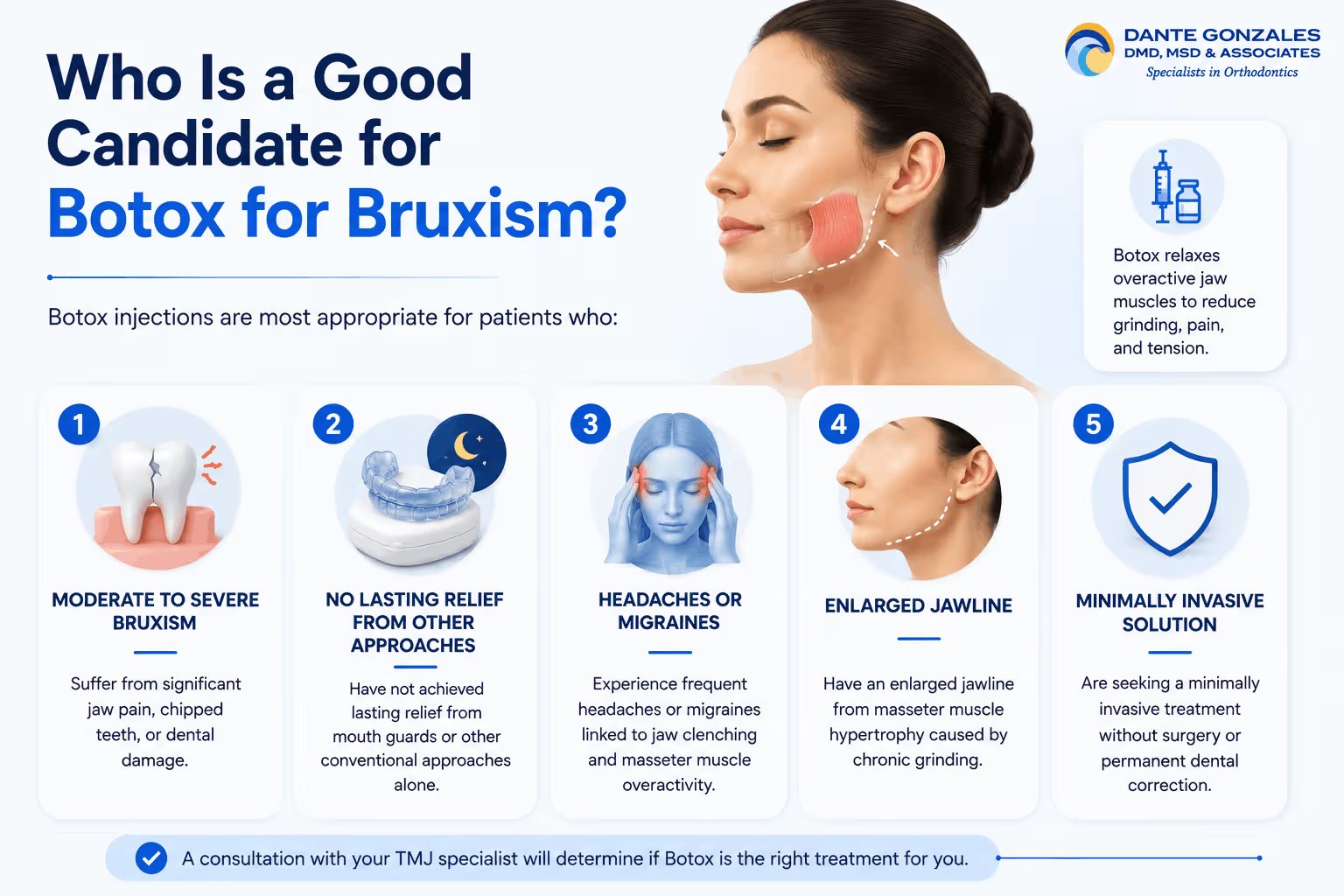
Botox injections are most appropriate for patients who:
- Suffer from moderate to severe bruxism with significant jaw pain, chipped teeth, or dental damage
- Have not achieved lasting relief from mouth guards or other conventional approaches alone
- Experience frequent headaches or migraines linked to jaw clenching and masseter muscle overactivity
- Have an enlarged jawline from masseter muscle hypertrophy caused by chronic grinding
- Are seeking a minimally invasive treatment without surgery or permanent dental correction
When Additional Treatment May Be Needed
Botox for bruxism is highly effective at reducing the muscular component of teeth grinding and jaw clenching, but it does not address the underlying triggers of bruxism. Chronic stress and anxiety, sleep disorders, and sleep apnea all contribute to bruxism and require their own targeted management. Stress reduction techniques including cognitive behavioral therapy, relaxation exercises, muscle relaxation exercises, and improved sleep hygiene address the root behavioral and psychological triggers of involuntary grinding. For patients with significant dental damage from years of grinding, dental correction may also be needed to restore the teeth alongside Botox treatment.
Side Effects and Safety of Botox for Bruxism
Botox injections for bruxism are generally safe when administered by a trained and experienced dentist. Side effects are usually mild and temporary, including local bruising at the injection site, temporary changes in chewing strength, and occasional minor discomfort in the days following the procedure. In very rare cases, botulinum toxin can spread into surrounding areas of the body, leading to more serious side effects that require immediate medical attention. Patients should always seek Botox treatment from a qualified dental provider with specific experience in jaw and facial muscle injections to minimize risk and ensure optimal results.
The 4-Hour Rule After Botox
After receiving Botox injections for bruxism, patients are advised to remain upright for at least four hours and avoid rubbing or massaging the injection sites. This 4-hour rule prevents the botulinum toxin from migrating away from the intended masseter muscle before it fully settles. Patients should also avoid strenuous exercise for the remainder of the day following their Botox treatment and refrain from lying face-down or applying direct pressure to the jaw area.
Does Masseter Botox Change Face Shape?
Yes, in many patients, repeated Botox injections into the masseter muscle gradually reduce the muscle size over successive treatment cycles. Patients with a square or overly wide jawline from hypertrophied masseter muscles often notice a natural facial slimming effect after several Botox treatments as the masseter muscle decreases in bulk. This cosmetic benefit is a frequent secondary advantage for patients who pursue Botox for bruxism primarily for pain relief and teeth grinding management. The change in jawline is gradual and proportional, not abrupt, and most patients consider it a positive side effect of their bruxism treatment.
Start Bruxism Treatment at Dante Gonzales Orthodontics
If teeth grinding, jaw clenching, jaw pain, or the dental damage caused by bruxism has been affecting your quality of life and traditional treatments have not delivered the relief you need, Botox for bruxism may be the solution. At Dante Gonzales Orthodontics, we assess the full scope of your bruxism symptoms, the severity of any dental damage, and the contributing factors driving your grinding before recommending a personalized treatment plan.
Comprehensive Bruxism Assessment: We evaluate your masseter muscle activity, the extent of dental damage to your tooth enamel, and any TMJ-related symptoms to determine the most effective treatment approach for your specific bruxism severity and jaw pain profile.
Expert Botox Injections for Bruxism: Our Botox treatment for bruxism is precisely administered into the masseter muscle and any affected surrounding jaw muscles, delivering targeted reduction in teeth grinding and jaw clenching force with minimal discomfort and no downtime.
Integrated Bruxism Management: We combine Botox for bruxism with mouth guards, stress reduction techniques, and dental correction where needed, ensuring your treatment plan addresses both the muscular symptoms and the underlying triggers of your grinding and clenching for the most complete and lasting relief possible.
If teeth grinding, jaw soreness, chipped teeth, or chronic headaches from bruxism have been affecting your daily life, Dante Gonzales Orthodontics in Dublin and Tracy, CA is ready to help you find effective, lasting relief.