
If you have ever experienced jaw pain, a clicking sound when you open your mouth, or headaches that seem to radiate from the area in front of your ears, you may have encountered one of the most commonly misunderstood conditions in dental medicine. What is TMJ disorder? The temporomandibular joint or TMJ is the jaw joint that connects your lower jaw to the temporal bone of your skull, and a disorder affecting it can disrupt everything from chewing and speaking to sleeping and daily comfort. At Dante Gonzales Orthodontics, understanding TMJ disorders is the foundation of helping patients identify what is happening in their jaw and finding the most effective, least invasive path to relief.
Understanding the Temporomandibular Joint
The temporomandibular joint TMJ is one of the most complex and constantly used joints in the entire human body. Unlike most joints that move in a single plane, the TMJ allows for side to side, up and down, and forward and back movements making it uniquely capable of the full range of motions required for chewing, speaking, yawning, and facial expressions. You have two of these joints, one on each side of the face, located directly in front of each ear where the lower jaw meets the temporal bone of the skull.
Each temporomandibular joint consists of the condyle of the mandible the rounded end of the lower jaw an articulating disc that sits between the ball and socket of the jaw joint to absorb shock and facilitate smooth movement, and the articular tubercle of the temporal bone. The TMJ is the only joint in the human body that works as a coordinated unit across two sides simultaneously, which is why damage or dysfunction in one jaw joint so often produces symptoms that radiate across the face, neck, and head.
What Is TMJ Disorder?
TMJ disorders also referred to as temporomandibular disorders or TMD are a group of more than 30 medical conditions that cause pain and dysfunction in the jaw joint and the muscles controlling jaw movement. The temporomandibular joint dysfunction can range from mild, intermittent discomfort to severe, chronic pain conditions that significantly affect quality of life.
Temporomandibular disorders generally fall into three distinct categories, each involving different structures of the jaw joint and surrounding tissues:
| TMJ Disorder Category | What It Affects | Common Signs and Symptoms |
|---|---|---|
| Myofascial Disorders | Jaw muscles & chewing muscles | Dull ache, jaw fatigue, facial pain, muscle tenderness |
| Internal Derangement | Disc displacement, jaw bone damage | Clicking, popping, locking of the jaw, restricted jaw movements |
| Degenerative Joint Disease | Cartilage erosion, joint wear | Chronic pain, grinding sensation, progressive jaw stiffness |
TMJ disorders are among the most frequently reported pain conditions in the craniofacial region. According to the National Institute of Dental and Craniofacial Research, temporomandibular disorders affect tens of millions of people in the United States, with women more frequently affected than men a pattern that research in dental and craniofacial research has linked to the potential role of female sex hormones, particularly estrogen, in joint inflammation and pain sensitivity.
What Causes TMJ Disorder?
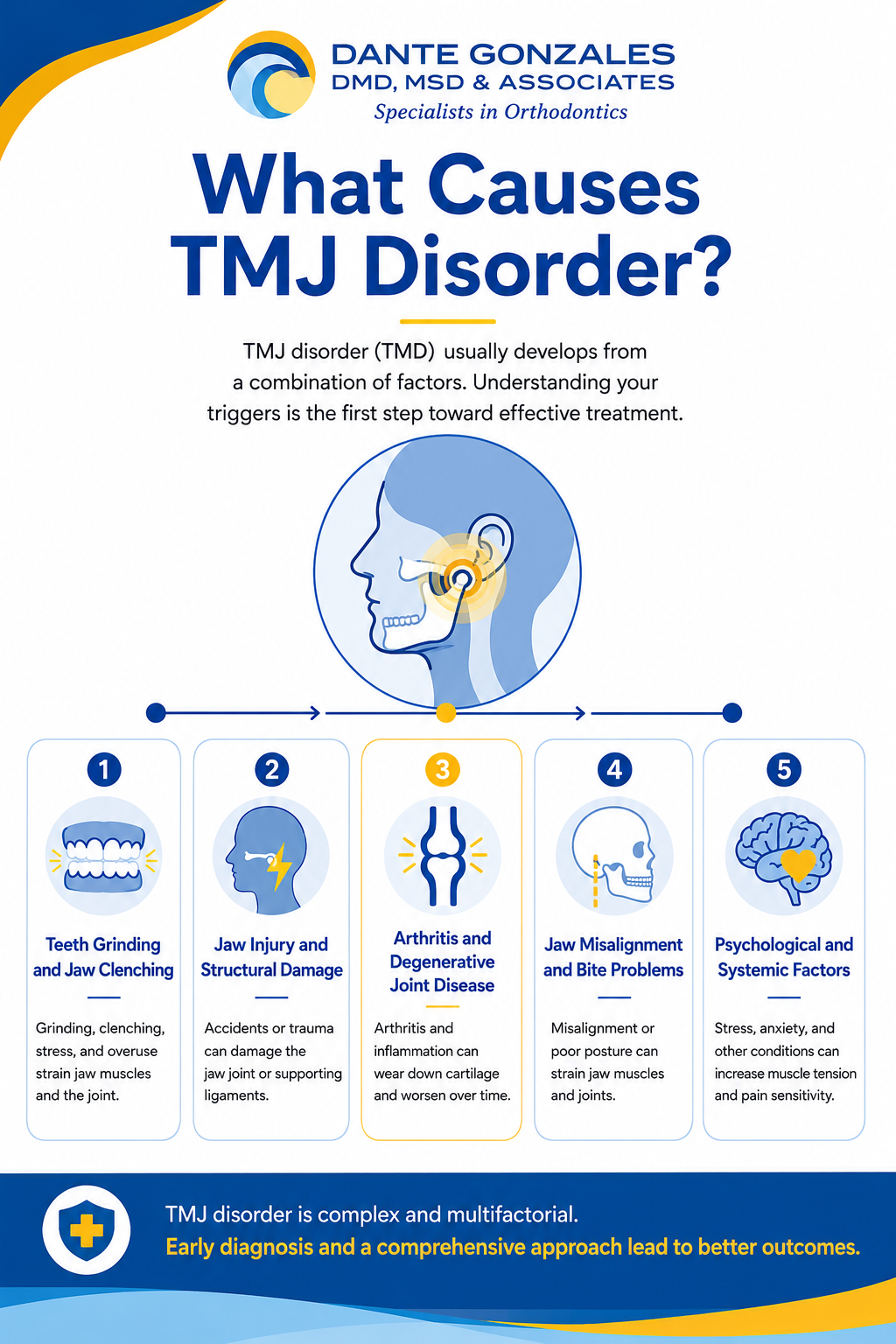
TMD usually develops from a combination of factors rather than a single identifiable cause. The etiology of temporomandibular disorders is thought to be multifactorial, with contributing factors including abnormal dental occlusion, bruxism, joint capsule inflammation, muscle spasm, and psychological stress. Understanding what triggers TMJ problems in a specific patient is the first step toward identifying the most effective treatment approach.
Teeth Grinding and Jaw Clenching
Bruxism or chronic teeth grinding and clenching is one of the most significant and well-documented contributors to TMJ disorder. Teeth clenching and jaw clenching place unnatural, repetitive force on the temporomandibular joint and the chewing muscles that support it. Psychological stress can lead to subconscious jaw clenching during the day, while poor sleep quality and insomnia have been linked to heightened pain sensitivity and increased nighttime teeth-grinding habits. Gum chewing and other overuse habits such as biting fingernails can also cause jaw muscle spasms that contribute to TMD pain.
Jaw Injury and Structural Damage
Direct jaw injury from accidents, falls, or impact can damage the temporomandibular joint or tear its supporting ligaments, triggering acute TMJ disorder or contributing to long-term joint degradation. Internal derangement refers to structural problems within the joint itself such as a displaced disc or damaged jaw bone that prevent the joint from functioning within its normal range. A study found that TMJ displacement was present in 84% of patients with symptomatic TMJ compared to 33% of asymptomatic subjects, indicating that disc displacement is a central feature of many clinical TMD cases.
Arthritis and Degenerative Joint Disease
Arthritis can erode the protective cartilage within the jaw joint, leading to degenerative joint disease that progressively worsens without management. Rheumatoid arthritis, ankylosing spondylitis, and other connective tissue diseases can all affect the temporomandibular joint in addition to other joints throughout the body. The jaw joint, being the most constantly used joint in the human body, is particularly vulnerable to the cumulative effects of inflammatory joint conditions over time.
Jaw Misalignment and Bite Problems
Jaw alignment issues such as a misaligned bite or malocclusion can unevenly distribute pressure across the jaw muscles and jaw bone during chewing, speaking, and swallowing, leading to chronic muscle strain and joint stress. Poor posture can also alter jaw alignment over time by straining the neck and facial muscles that support the jaw joint. Genetic, hormonal, and environmental factors can increase the risk of developing TMJ disorders, with research suggesting that deeper structural predispositions such as narrow jaw joints or hypermobile ligaments may run in families.
Psychological and Systemic Factors
TMJ disorders are frequently associated with a broader pattern of chronic pain and systemic conditions. Research in dental and craniofacial research has identified connections between temporomandibular disorders and conditions including irritable bowel syndrome, fibromyalgia, chronic fatigue, and post traumatic stress disorder suggesting that central pain sensitization plays a role in many TMD cases. These associations make early diagnosis and a comprehensive, multimodal treatment approach particularly important for patients with overlapping medical conditions.
Signs and Symptoms of TMJ Disorders
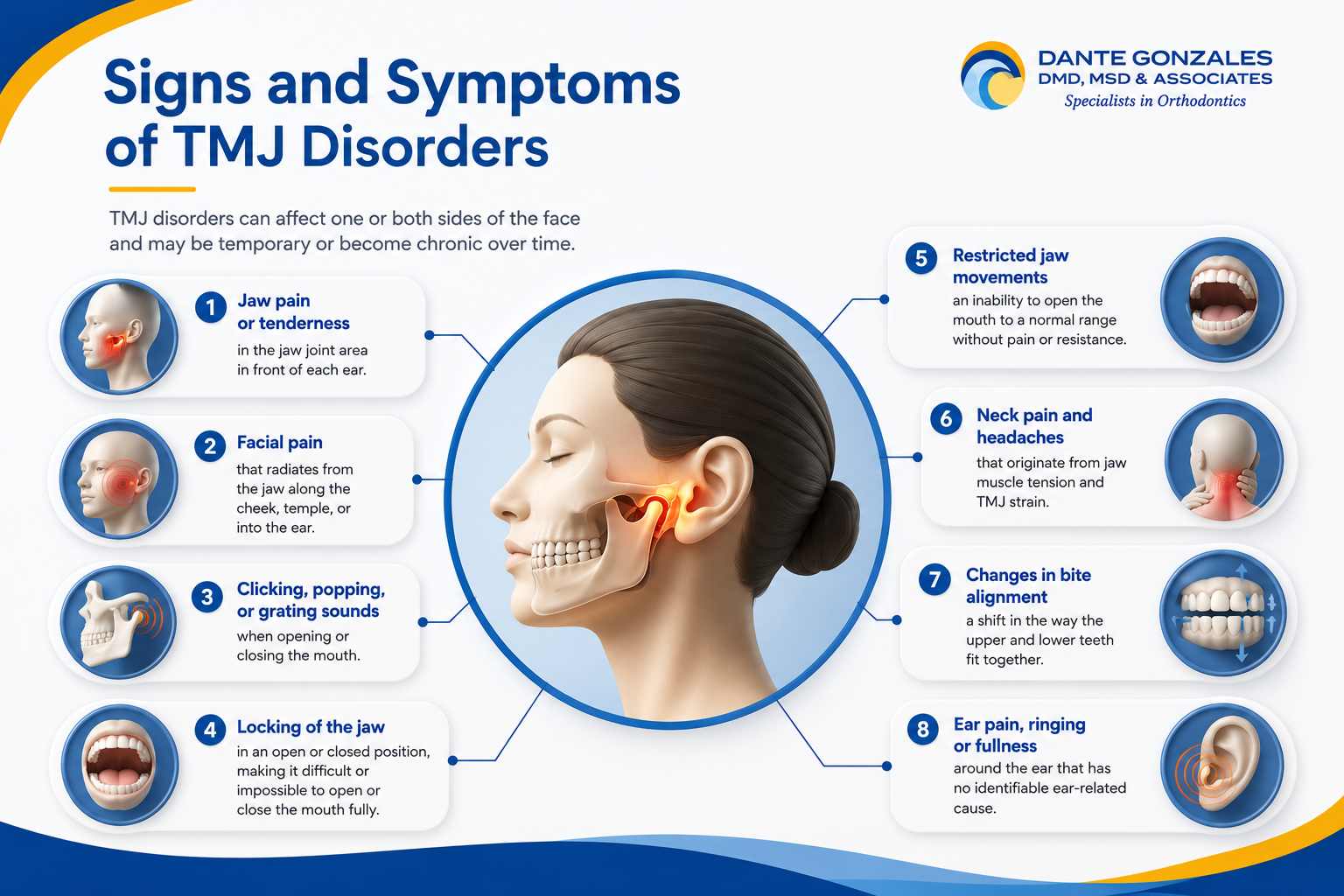
TMJ symptoms can occur on one or both sides of the face and may be temporary or develop into chronic pain conditions over time. The following symptoms are among the most commonly reported by patients with temporomandibular joint dysfunction at Dante Gonzales Orthodontics:
- Jaw pain or tenderness particularly in the jaw joint area directly in front of each ear
- Facial pain that radiates from the jaw along the cheek, temple, or into the ear
- Clicking, popping, or grating sounds when opening or closing the mouth during jaw movements
- Locking of the jaw in an open or closed position, making it difficult or impossible to close or open the mouth fully
- Restricted jaw movements an inability to open the mouth to a normal range without pain or resistance
- Neck pain and headaches that originate from jaw muscle tension and temporomandibular joint strain
- Changes in the bite a shift in the way upper and lower teeth fit together
- Ear pain ringing in the ears, or a sense of fullness around the ear that has no identifiable ear-related cause
Severe Symptoms That Require Prompt Evaluation
In more advanced cases of temporomandibular joint disorders, severe symptoms can significantly impair daily function. Jaw stiffness that limits chewing, speaking, and yawning, along with complete locking of the jaw, represents a clinical urgency that warrants prompt evaluation by a TMJ specialist or oral and maxillofacial surgeon. Physical examination findings in severe TMD may include visible limitation of jaw opening, palpable spasm of facial muscles, unilateral facial swelling, and tenderness to palpation directly over the temporomandibular joint. If left unaddressed, chronic tmd pain can become a self-reinforcing cycle that affects sleep, nutrition, and psychological wellbeing.
Is TMJ a Serious Problem?
For many patients, mild TMJ disorders resolve on their own with simple lifestyle modifications and conservative care. For others, untreated TMD progresses into a chronic pain condition that affects the ability to eat, sleep, and function normally. TMJ is not always a lifelong problem but without proper diagnosis and management, the joint degradation, muscle compensation patterns, and pain sensitization that develop over time can make the condition increasingly difficult to treat effectively. Early diagnosis is the most important factor in preventing temporary TMJ dysfunction from becoming a chronic, complex disorder.
How Is TMJ Disorder Diagnosed?
Diagnosing temporomandibular disorders involves a combination of medical history review, physical examination, and in many cases, imaging. Your healthcare provider will begin by asking about the onset, nature, and pattern of your jaw pain and any associated symptoms. A thorough physical examination assesses the range and quality of jaw movements, the presence of clicking or grating sounds, muscle tenderness, and the relationship between the upper and lower teeth.
When the clinical picture requires further investigation, magnetic resonance imaging is the most informative diagnostic tool for evaluating the soft tissues of the temporomandibular joint particularly the position and condition of the articular disc. The 3-finger test is a simple clinical screening tool: if you cannot place three fingers stacked vertically between your upper and lower teeth when the mouth is open, restricted jaw opening is present and warrants further evaluation. Your healthcare provider may also review your medical history for systemic conditions such as rheumatoid arthritis, degenerative joint disease, or connective tissue diseases that can affect the jaw joint.
What Are the Best Treatment Options for TMJ Disorder?
Treatment guidelines for TMJ disorders prioritize conservative and reversible methods that do not permanently alter the jaw or teeth. The best treatment for TMJ disorder depends on the type of temporomandibular disorder, the severity of symptoms, and the underlying contributing factors. Initial management of TMJ disorders typically involves a conservative multimodal approach that combines medications, physical therapy, and behavioral changes before any invasive intervention is considered.
Conservative and Non-Invasive Treatments
For most patients with temporomandibular disorders, the following conservative treatments are the first and most effective line of care:
- Oral appliances custom-fitted mouthguards and dental splints prevent teeth clenching, reduce jaw muscle strain, and relieve pressure on the temporomandibular joint during sleep
- Nonsteroidal anti-inflammatory drugs over-the-counter NSAIDs reduce inflammation and manage tmd pain in the short term
- Muscle relaxants prescribed for patients with significant jaw muscle spasm contributing to TMJ dysfunction
- Physical therapy gentle stretches, manual therapy, and strengthening exercises prescribed by physical therapists help restore normal jaw movements and alleviate chronic facial pain and neck pain
- Moist heat and ice therapy temperature therapy using moist heat for muscle tension and ice packs for acute swelling and inflammation is a standard component of TMJ self-management
- Relaxation techniques stress management, mindfulness, and behavioral therapy address the psychological stress and jaw clenching patterns that contribute to TMD flare-ups
- Soft foods and dietary modification eating soft foods and avoiding hard, chewy foods reduces the mechanical load on the temporomandibular joint during active flare-ups
- Transcutaneous electrical nerve stimulation (TENS) a non-invasive pain management technique that uses low-level electrical currents to relax jaw muscles and reduce myofascial pain
When Surgery May Be Considered
Surgery for TMJ disorders is typically a last resort reserved for patients with severe structural joint degradation that has not responded to extensive conservative care. Minimally invasive procedures such as arthrocentesis a joint lavage are considered before open joint surgery. When surgery is necessary, an oral and maxillofacial surgeon or maxillofacial surgeon performs the procedure, which may involve involve surgery to repair or replace the disc, remove scar tissue, or in the most severe cases, replace the joint entirely. The National Institute of Dental and Craniofacial Research and clinical guidelines consistently recommend exhausting all non-surgical options before pursuing any procedure that permanently alters the jaw joint or surrounding tissues.
The Role of Orthodontic Care in TMJ Management
At Dante Gonzales Orthodontics, orthodontic treatment plays a meaningful role in the comprehensive management of temporomandibular disorders for patients whose TMD is linked to bite misalignment or jaw positioning. Correcting the proper alignment of the upper and lower teeth through Invisalign or other orthodontic treatment can reduce the uneven forces on the jaw joint that contribute to chronic tmd pain, muscle strain, and progressive joint degradation. While orthodontic care is not a standalone treatment for all forms of TMJ disorder, it is a clinically important component of long-term TMD management for patients with a malocclusion-related component to their condition.
Experiencing Jaw Pain? Dante Gonzales Orthodontics Can Help
If you are experiencing jaw pain, clicking, headaches, or any of the signs and symptoms of temporomandibular disorders described in this guide, early diagnosis and conservative treatment are your most important next steps. The longer TMJ disorder goes unaddressed, the more complex and difficult to treat it becomes. At Dante Gonzales Orthodontics, we evaluate the full picture your bite, jaw alignment, muscle function, and medical history to determine whether orthodontic care is part of the right treatment plan for your specific TMJ concerns.
Comprehensive TMJ and Bite Evaluation: We use advanced digital imaging and clinical assessment to evaluate the position of your temporomandibular joint, the alignment of your upper and lower teeth, and the muscle patterns contributing to your TMD symptoms giving you a clear, accurate picture of what is happening before any treatment is recommended.
Orthodontic Treatment for Bite-Related TMD: For patients whose temporomandibular joint dysfunction has a bite alignment component, we design a personalized orthodontic treatment plan that addresses the underlying jaw positioning issues reducing the forces on the jaw joint and supporting long-term TMD relief alongside other healthcare providers involved in your care.
Collaborative, Patient-Centered Care: We work alongside your healthcare provider, physical therapist, or maxillofacial surgeon to ensure your TMJ disorder is managed comprehensively with every aspect of your jaw health considered as part of a coordinated, effective treatment plan.
If jaw pain, locking of the jaw, or facial discomfort has been affecting your daily life, Dante Gonzales Orthodontics in Dublin and Tracy, CA is here to help you understand your options and take the first step toward lasting relief.