If you regularly experience headaches that no amount of pain medication fully resolves, your jaw may be the root cause. TMJ headaches, headaches caused or worsened by temporomandibular joint TMJ dysfunction, are among the most frequently misdiagnosed causes of chronic head pain. Many patients spend years treating the headaches alone without realizing the jaw joint and surrounding jaw muscles are driving the entire cycle. At Dante Gonzales Orthodontics, identifying the root cause of TMJ-related headaches is where lasting relief begins.
What Are TMJ Headaches?
TMJ headaches are headaches that originate from dysfunction in the temporomandibular joint, the jaw joint connecting the lower jaw to the skull, or from the jaw muscles and facial muscles that support it. When TMJ disorder affects the jaw joint through joint inflammation, joint misalignment, or muscle overload from teeth grinding and jaw clenching, the resulting tension, nerve irritation, and referred pain produce headaches that are virtually indistinguishable from tension headaches or migraines without a professional evaluation.
Headaches related to TMJ disorders arise from muscle tension, nerve irritation, or joint inflammation that radiates pain into the temples, forehead, or behind the eyes. TMJ disorder affects millions of patients whose chronic headaches are jaw-related symptoms that never resolve because the jaw joint is never treated. An accurate diagnosis makes a big difference between treating the symptom and solving the problem at the root cause.
What Does a TMJ Headache Feel Like?
TMJ headaches often feel like tension headaches, characterized by pressure, tightness, or a dull ache on one or both sides of the head. A TMJ headache usually starts around the temples and jaw, radiating to the neck, forehead, and shoulder. The pain is typically a persistent dull ache rather than the sharp, throbbing quality of migraine pain, though in patients prone to migraines, TMJ disorder can trigger full migraine attacks.
Symptoms That Accompany TMJ Headaches
Patients who experience jaw pain and TMJ headaches typically also report:
- Tightness across the temples and jaw muscles that worsens through the day
- Headaches that are worst in the morning after nighttime teeth grinding or jaw clenching
- Pain that increases when chewing hard foods, opening the mouth wide, or yawning
- Neck and shoulder pain alongside the head pain, as surrounding muscles overcompensate for jaw misalignment
- Jaw clicking or popping sounds accompanying the TMJ-related headaches
- Trouble chewing or a sense of jaw fatigue after meals
Can TMJ Problems Cause Migraines?
Yes, TMJ problems can trigger migraines. TMJ disorders can cause both headaches and migraines through increased central sensitization, which makes the brain more reactive to pain signals. The trigeminal nerve, responsible for facial sensation, is activated by both migraines and TMJ issues, leading to overlapping migraine symptoms and diagnostic difficulty. For patients already prone to migraines, chronic TMJ-related headaches lower the migraine threshold, increasing both migraine frequency and migraine pain intensity.
TMJ Headaches vs. Migraines: Key Differences
Because TMJ headaches and migraines share overlapping symptoms through shared trigeminal nerve pathways, distinguishing between them requires a comprehensive evaluation and medical history review. The table below outlines the key differences:
| Factor | TMJ Headaches | Migraines |
|---|---|---|
| How It Feels | Dull ache, pressure, tightness, one or both sides of head | Throbbing, pulsating, usually one side, may include nausea |
| Where It Starts | Temples, jaw, in front of each ear, radiates to neck | Back of head or behind eyes, radiates across the face |
| Common Triggers | Teeth grinding, jaw clenching, stress, poor posture | Light, sound, hormones, certain foods, stress |
| Associated Symptoms | Jaw pain, clicking, trouble chewing, shoulder pain | Nausea, light and sound sensitivity, visual aura |
| Duration | Hours to days, worsens with jaw use | 4 to 72 hours, worsens with physical activity |
| Key Overlap | Trigeminal nerve activation, can mimic migraine symptoms | Trigeminal nerve activation, can mimic TMJ headaches |
| Right Treatment | TMJ treatment, bite guards, Botox, physical therapy | Migraine medication, preventive therapy, lifestyle changes |
Many patients have both TMJ disorder and migraines simultaneously. When TMJ treatment is applied to the jaw-related component, overall headache frequency and migraine pain intensity typically reduce, even in patients with a confirmed migraine diagnosis. Getting the right treatment for the right root cause makes a big difference in daily life and quality of sleep.
What Causes TMJ Headaches?
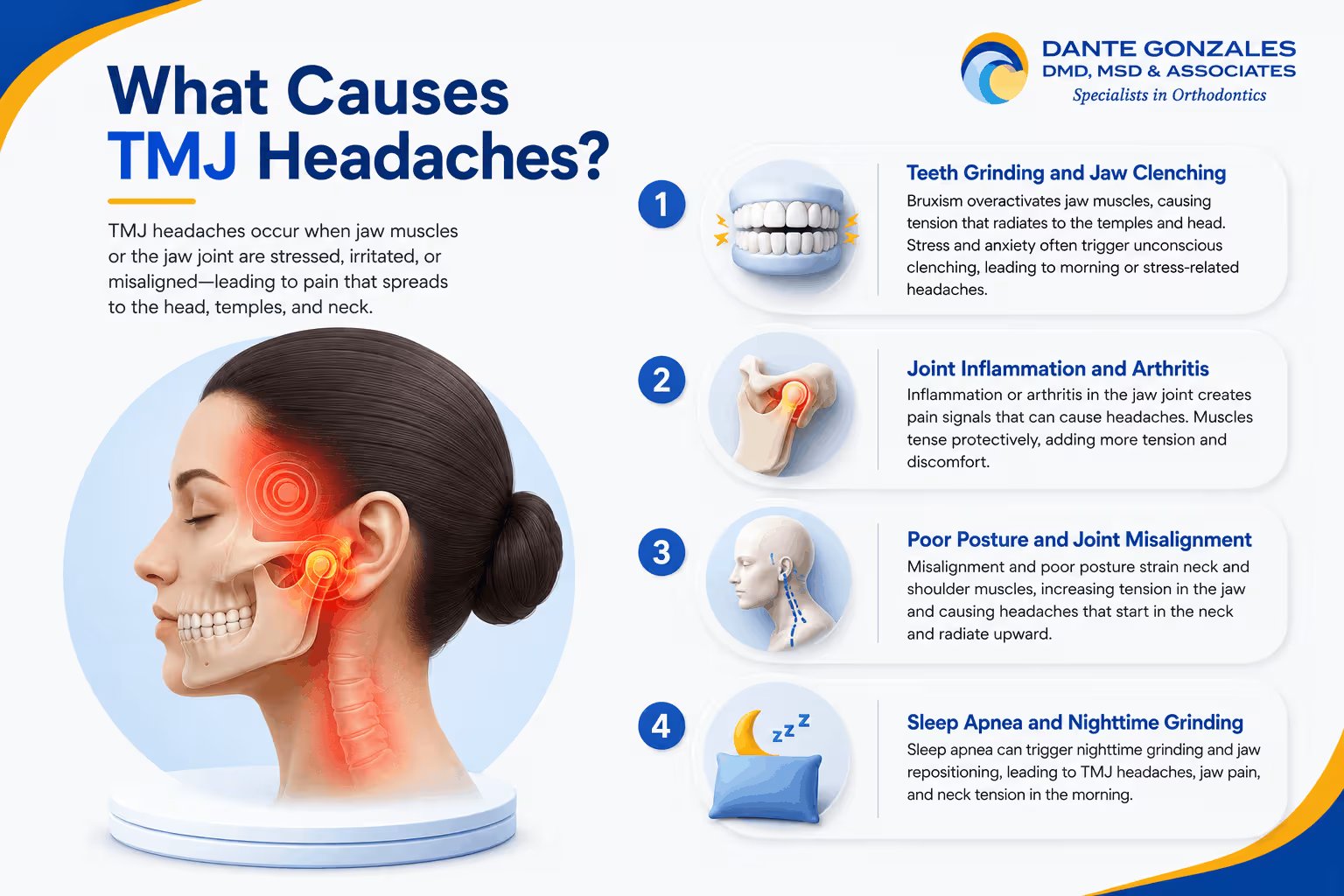
Teeth Grinding and Jaw Clenching
Bruxism, habitual teeth grinding and jaw clenching, is the most common driver of TMJ headaches. Clenching or grinding activates the jaw muscles with excessive force, generating muscle tension that radiates into the temples and head. Stress and anxiety provoke unconscious jaw clenching and tightening of facial muscles, contributing to TMJ-related headaches that are worst first thing in the morning or after a stressful day.
Joint Inflammation and Arthritis
Joint inflammation from degenerative conditions like arthritis or direct jaw trauma creates ongoing pain signals the nervous system interprets as headaches. When the jaw joint is inflamed, surrounding muscles tense protectively, adding muscle tension headaches on top of joint-driven pain. Arthritis affecting the temporomandibular joint is a frequently overlooked cause of chronic headaches, particularly in older patients.
Poor Posture and Joint Misalignment
Misalignment of the temporomandibular joint forces neck and shoulder muscles to overcompensate, leading to tension headaches that originate in the cervical spine and radiate upward. Poor posture, particularly forward head posture during extended screen time, changes the resting position of the lower jaw and increases mechanical load on the jaw joint and jaw muscles throughout the day, worsening TMJ disorder affects and headache frequency.
Sleep Apnea and Nighttime Grinding
Sleep apnea and TMJ disorder frequently co-exist. Nighttime airway obstruction triggers jaw repositioning and teeth grinding during sleep, producing severe TMJ headaches and jaw pain upon waking. Patients experiencing this pattern of morning headaches, jaw soreness, and neck tension should seek evaluation for both conditions, addressing sleep apnea and TMJ issues together is essential for breaking the cycle.
TMJ Headache Treatment Options
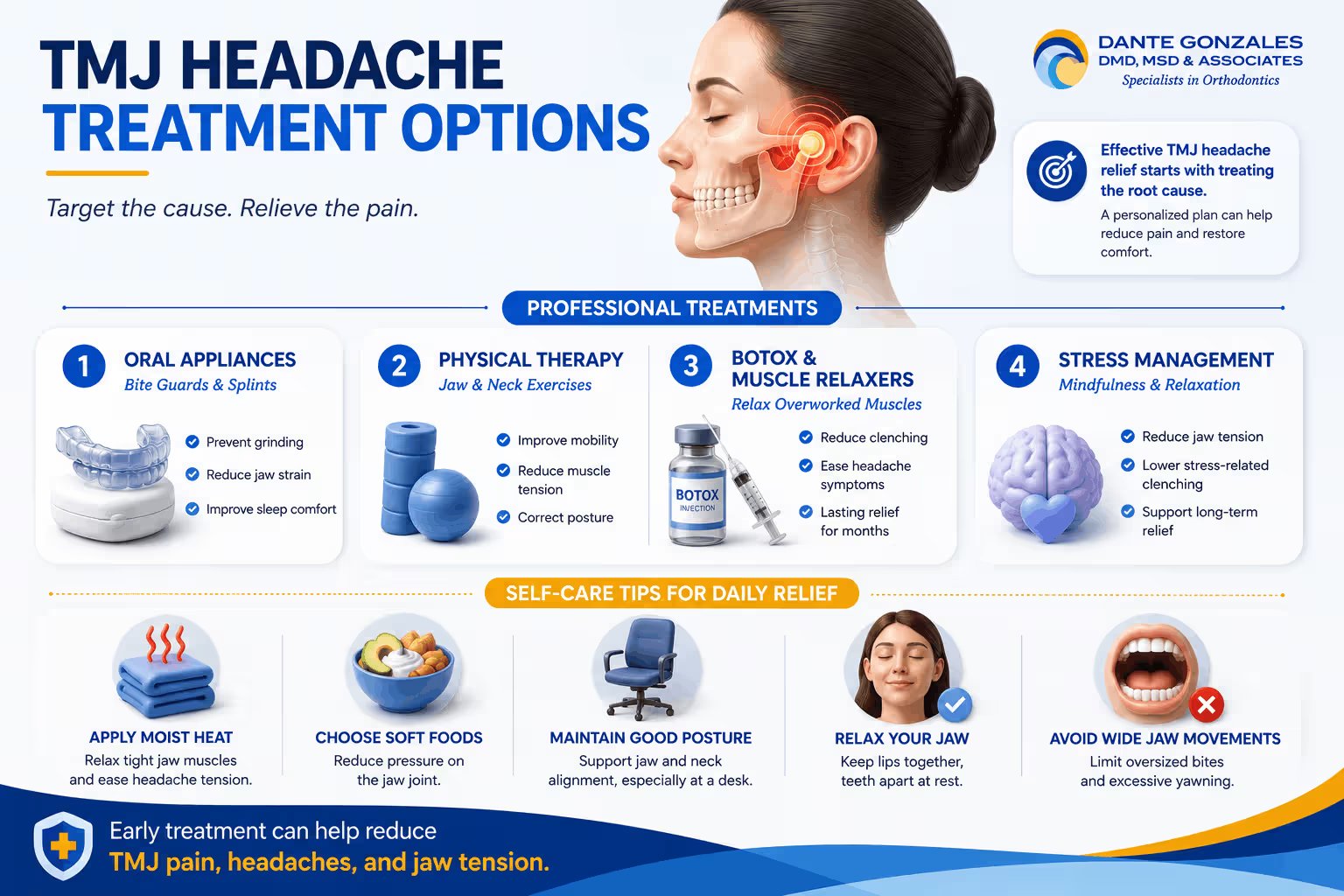
Managing TMJ headaches effectively requires addressing both the immediate symptoms and the underlying mechanical causes. The right treatment plan is built from a comprehensive evaluation and tailored to the specific jaw-related root cause identified by your healthcare provider or TMJ specialist.
Oral Appliances
Custom-fitted oral appliances, bite guards and splints, keep the jaw joint in the correct resting position and prevent clenching or grinding during sleep. These dental devices make a significant difference for patients whose TMJ headaches are driven by nighttime bruxism, reducing morning headaches and jaw pain within the first weeks of consistent nightly use.
Physical Therapy and Jaw Exercises
Physical therapy, including jaw exercises, manual therapy, and physical therapy exercises targeting the jaw and neck, strengthens and stretches the jaw muscles, reducing the muscle tension that generates TMJ-related headaches. A physical therapist designs specific jaw exercises to restore joint mobility and correct the poor posture patterns that contribute to ongoing tension headaches.
Botox and Muscle Relaxers
Muscle relaxers and botulinum toxin injections reduce TMJ headaches by alleviating muscle tightness and tension in the jaw muscles. Botox injected into the masseter and temporalis jaw muscles reduces clenching intensity that drives headaches, with lasting relief typically maintained for three to six months per treatment. Stress management techniques, mindfulness, biofeedback, and relaxation exercises, address the psychological root cause of jaw clenching that contributes to both TMJ headaches and migraine pain.
Self-Care for TMJ Headaches
For day-to-day self care relief of TMJ headaches between treatment appointments:
- Apply moist heat to the jaw and temples to relax tight jaw muscles and ease headache tension
- Avoid hard foods and chewy foods that increase load on the jaw joint during active flare-ups
- Maintain good posture throughout the day, particularly at a desk, to reduce neck and jaw muscle strain
- Keep teeth slightly apart at rest rather than clenching, rest the jaw with lips together, teeth apart
- Limit wide jaw movements such as yawning broadly or taking oversized bites
Find Lasting Relief from TMJ Headaches at Dante Gonzales Orthodontics
If TMJ headaches or migraines are disrupting your daily life and standard headache treatment has not delivered lasting relief, the jaw joint may be the overlooked source of your pain. At Dante Gonzales Orthodontics, we conduct a comprehensive evaluation of the jaw joint, bite alignment, and TMJ symptoms to identify the root cause of your headaches and build the right treatment plan for your specific case.
TMJ and Bite Assessment: We evaluate the temporomandibular joint, jaw muscles, and bite relationship using advanced imaging and clinical examination to give you an accurate diagnosis and clear treatment direction before any intervention is recommended.
Integrated TMJ Treatment Plan: From custom oral appliances and bite correction to referral for Botox therapy and physical therapy exercises, we build a TMJ treatment plan that addresses your headaches at the jaw level, tackling the root cause, not just the symptom.
Coordinated Care: We work alongside your healthcare provider, whether a neurologist, physical therapist, or TMJ specialist, ensuring your headache treatment addresses both the jaw-related and systemic components of your condition for the most complete and lasting relief.
If TMJ headaches, jaw pain, or chronic migraines have been affecting your quality of life, Dante Gonzales Orthodontics in Dublin and Tracy, CA is ready to help you find the lasting relief you deserve.