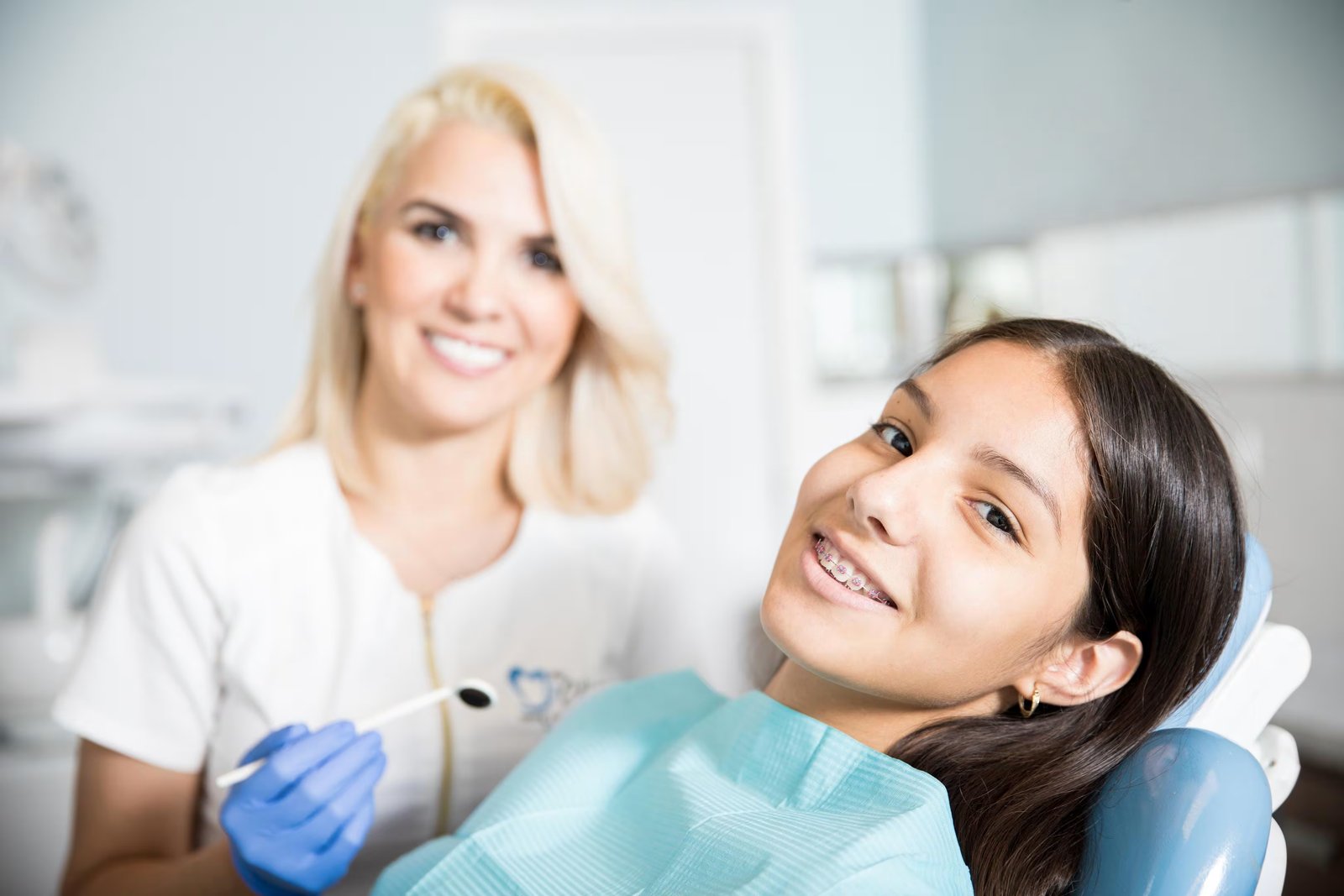
If your child has a gap between their front teeth, a bite that doesn't quite line up, or you've simply noticed crowded teeth coming in, you have probably asked yourself the same question every parent eventually asks: what is the best age for braces? The honest answer is that there is no single exact age that applies to every child. The best age for braces depends more on your child's dental development, jaw growth, and specific orthodontic issues than on chronological age alone. At Dante Gonzales Orthodontics, we help parents understand when early orthodontic treatment makes sense, when it's better to wait, and what to expect at every stage of their child's growth.
Why Age Isn't the Only Factor
Many parents assume there's a fixed age to get braces, but orthodontists actually look at a combination of factors: how many permanent teeth have erupted, how the jaw is developing, whether baby teeth are still present, and whether any functional issues like difficulty chewing or mouth breathing are affecting the child's mouth. Two children of the same age can be at very different stages of dental development, which is why a personalized orthodontic evaluation matters more than a birthday.
That said, there are well-established age ranges that most orthodontists use as a general guide.
The First Orthodontic Evaluation: Age 7
The American Association of Orthodontists recommends that every child have their first orthodontic evaluation by age 7, even if nothing looks obviously wrong. By this age, enough permanent teeth have usually come in for an orthodontist to spot early orthodontic problems like significant crowding, protruding front teeth, narrow jaws, or bite issues while the jaw is still growing and more responsive to treatment.
Most children lose their baby teeth by ages 6 or 7, and this transitional period — when baby teeth and adult teeth are mixed in the mouth — gives an orthodontist a clear picture of how the child's jaw and teeth are likely to develop. Importantly, many children are simply monitored after this age 7 evaluation. An evaluation does not automatically mean your child needs braces right away; it simply means an orthodontist is watching your child's growth and can catch problems early, before they become harder and more expensive to correct.
Phase One (Early) Treatment: Ages 7–10
For children with significant dental issues, an orthodontist may recommend Phase One treatment, sometimes called early orthodontic treatment, typically between ages 7 and 10. This phase does not usually involve a full set of traditional braces. Instead, it may use partial braces, expanders, or other appliances designed to guide jaw growth, create room for crowded teeth, or correct habits like mouth breathing before they affect how permanent teeth come in.
Early treatment can help with:
- Correcting jaw growth so the upper and lower jaws develop in proper position relative to each other
- Creating space for crowded permanent teeth still waiting to erupt
- Addressing protruding front teeth that are at higher risk of injury
- Reducing the need for tooth extractions later in adolescence
- Correcting oral habits, such as prolonged thumb sucking or mouth breathing, that can affect jaw shape over time
Not every child needs Phase One treatment. Some orthodontic issues are easier to correct when detected early, but many children can wait until more permanent teeth have erupted before starting any active treatment.
Phase Two: Comprehensive Treatment with Full Braces
For most children, active treatment with full braces begins between ages 9 and 14, once most permanent teeth have erupted. Most orthodontists consider ages 10 to 14 the optimal age range for traditional braces, since by this point the child has enough adult teeth in place for an orthodontist to move them into their correct, final position.
| Treatment Stage | Typical Age Range | What Happens |
|---|---|---|
| First orthodontic evaluation | Age 7 | Orthodontist assesses jaw growth and monitors development |
| Phase One (early treatment) | Ages 7–10 | Appliances address jaw growth, crowding, or habits before all adult teeth arrive |
| Phase Two (comprehensive treatment) | Ages 9–14 | Full braces or clear aligners align permanent teeth into their correct position |
| Common age range for braces | Ages 11–14 | Most children begin traditional braces treatment |
Comprehensive treatment usually begins once most permanent teeth have erupted, since starting full braces treatment before then can mean incoming adult teeth continue shifting the bite after treatment is already underway. This is also, coincidentally, around the age when children prefer to get braces alongside their peers — often between ages 11 and 13 — which can make the emotional and social adjustment easier.
Signs Your Child May Need Early Orthodontic Treatment
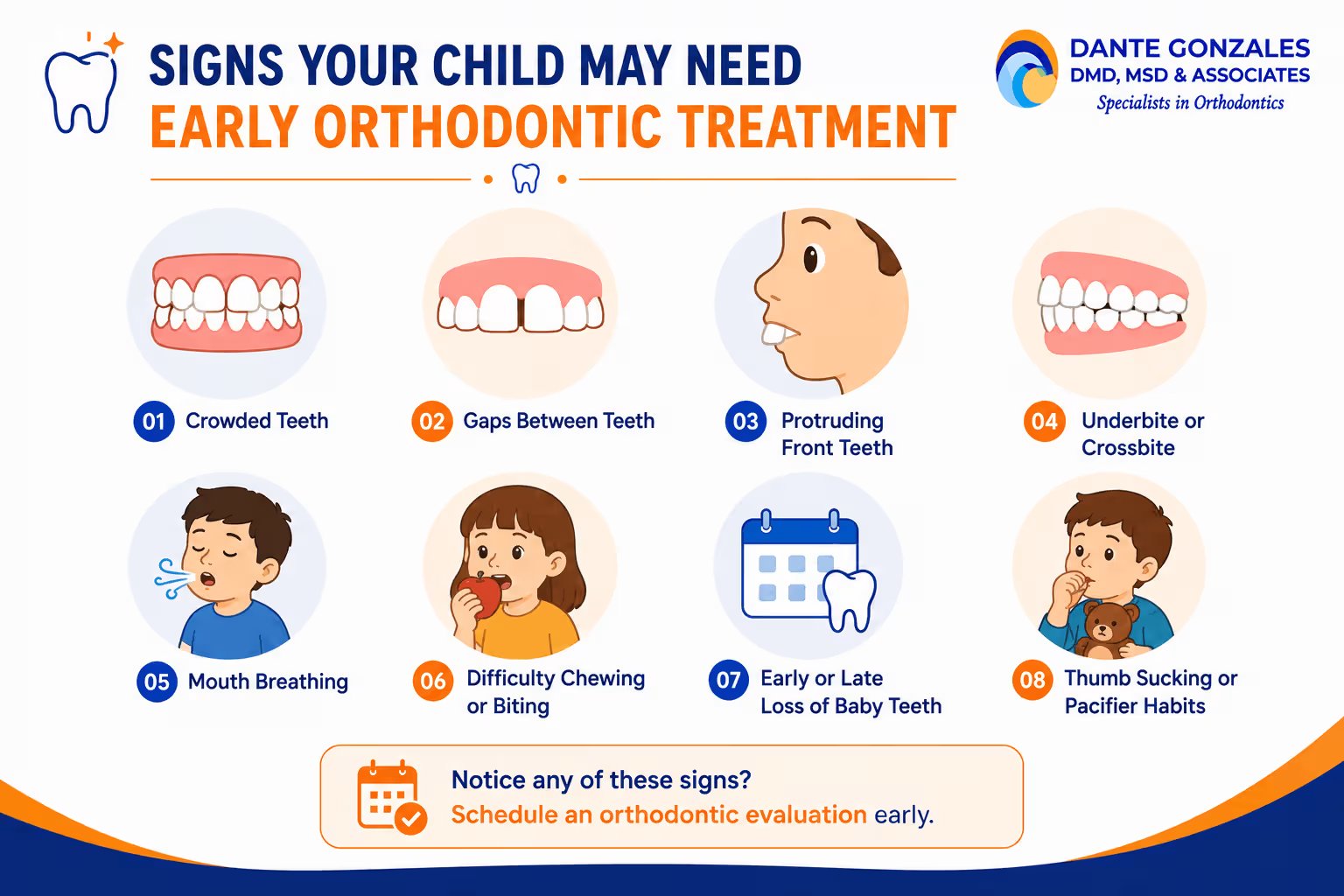
While every child's development is different, certain signs suggest it may be time for an orthodontic exam sooner rather than later:
- Crowded teeth that overlap or twist as they come in, which can lead to misalignment and chewing issues
- Gaps between teeth that are wider than expected, which can increase the risk of gum disease
- Protruding front teeth that stick out noticeably and are at greater risk of injury
- An underbite or crossbite, which can cause uneven wear on front teeth and difficulty chewing
- Mouth breathing, which can affect jaw shape and tooth alignment over time
- Difficulty chewing or biting, suggesting the upper and lower teeth aren't meeting properly
- Losing baby teeth very early or very late compared to other children the same age
- Thumb sucking or pacifier habits that continue past the age most children outgrow them
If you notice any of these signs in your child's mouth, it's worth scheduling an orthodontic evaluation with a local orthodontist rather than waiting for the standard age 7 checkup.
Does Emotional Readiness Matter Too?
Dental development isn't the only consideration. A child's maturity plays a real role in how successfully they manage orthodontic treatment. Wearing braces requires consistent good oral hygiene, care around what they eat, and the discipline to keep up with appointments and, in some cases, removable appliances. Many parents find that involving their child in the decision — explaining why treatment matters for their oral health and their smile — helps kids feel more ready to take on the responsibility that comes with braces.
Treatment Options for Children
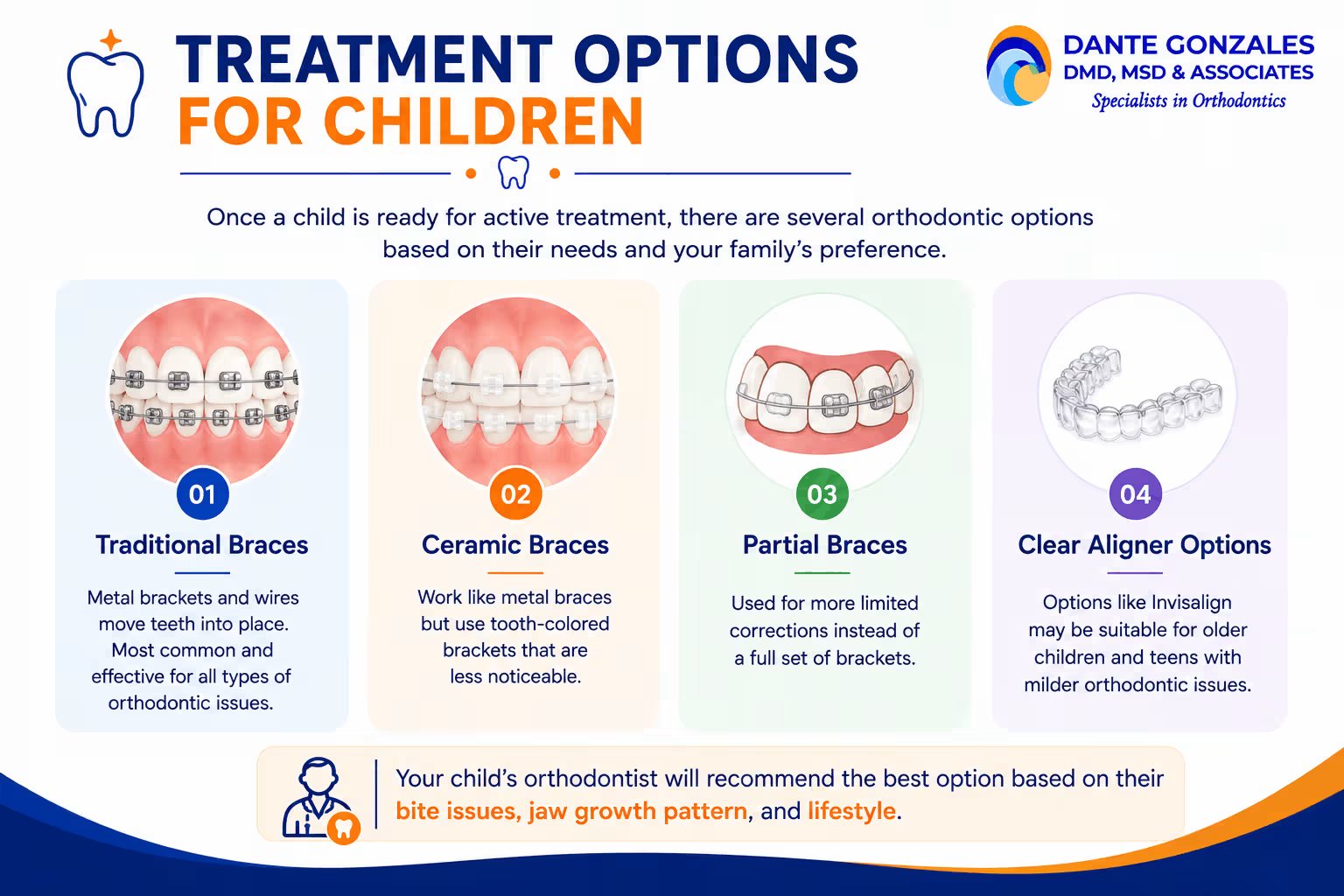
Once a child is ready for active treatment, there are several orthodontic treatment options to consider, depending on the specific orthodontic issues involved and family preference:
- Traditional braces use metal brackets and wires to gradually move teeth into correct position and remain the most common and versatile option for correcting significant crowding or bite issues in children
- Ceramic braces work the same way as traditional metal braces but use tooth-colored brackets that are less noticeable
- Partial braces may be used for more limited corrections rather than a full set of brackets
- Clear aligner options, such as Invisalign, may be appropriate for older children and teens with milder orthodontic problems
Your child's orthodontist will recommend the treatment option best suited to their specific bite issues, jaw growth pattern, and lifestyle.
Why Early Care Matters for Long-Term Oral Health
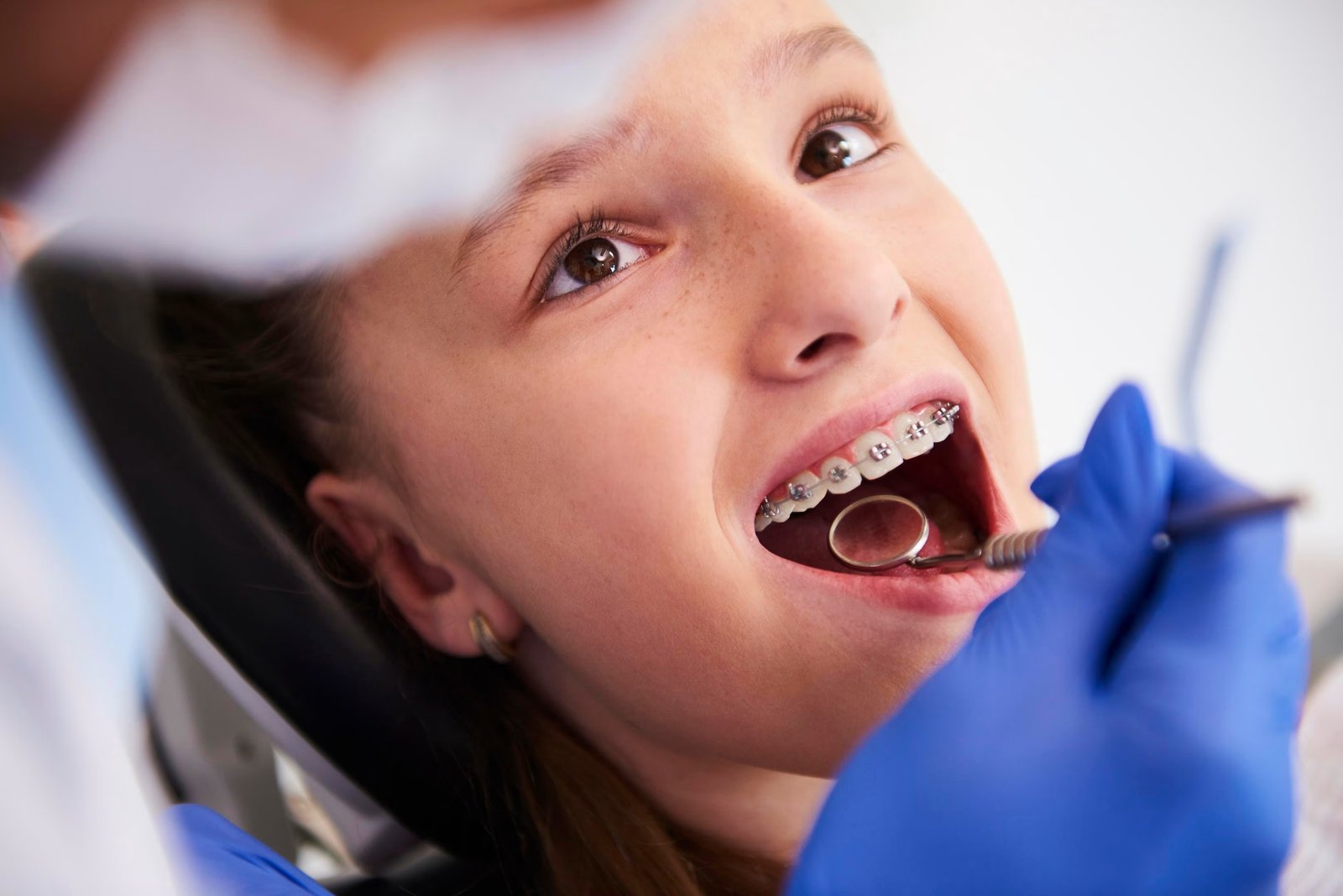
Early orthodontic treatment isn't just about achieving a healthy smile faster — it's about supporting a child's oral health for the long term. Crowded or misaligned teeth are harder to clean properly, which raises the risk of tooth decay and gum disease. Correcting bite issues and jaw growth patterns early can also mean a shorter, simpler treatment time later, since the orthodontist is working with a jaw that has already been guided into a better foundation.
Across the country, roughly four million people currently wear braces, and a growing number of them are children who received an early orthodontic evaluation that caught a developing issue before it became a bigger orthodontic problem.
Schedule Your Child's Orthodontic Evaluation with Dante Gonzales Orthodontics
Every child's development is different, and the best way to know what your child truly needs is a professional orthodontic evaluation — not a guess based on age alone. At Dante Gonzales Orthodontics in Dublin and Tracy, CA, we assess your child's jaw growth, permanent teeth, and bite to build a treatment plan tailored to their development, whether that means starting early treatment now or simply monitoring their growth until the time is right.