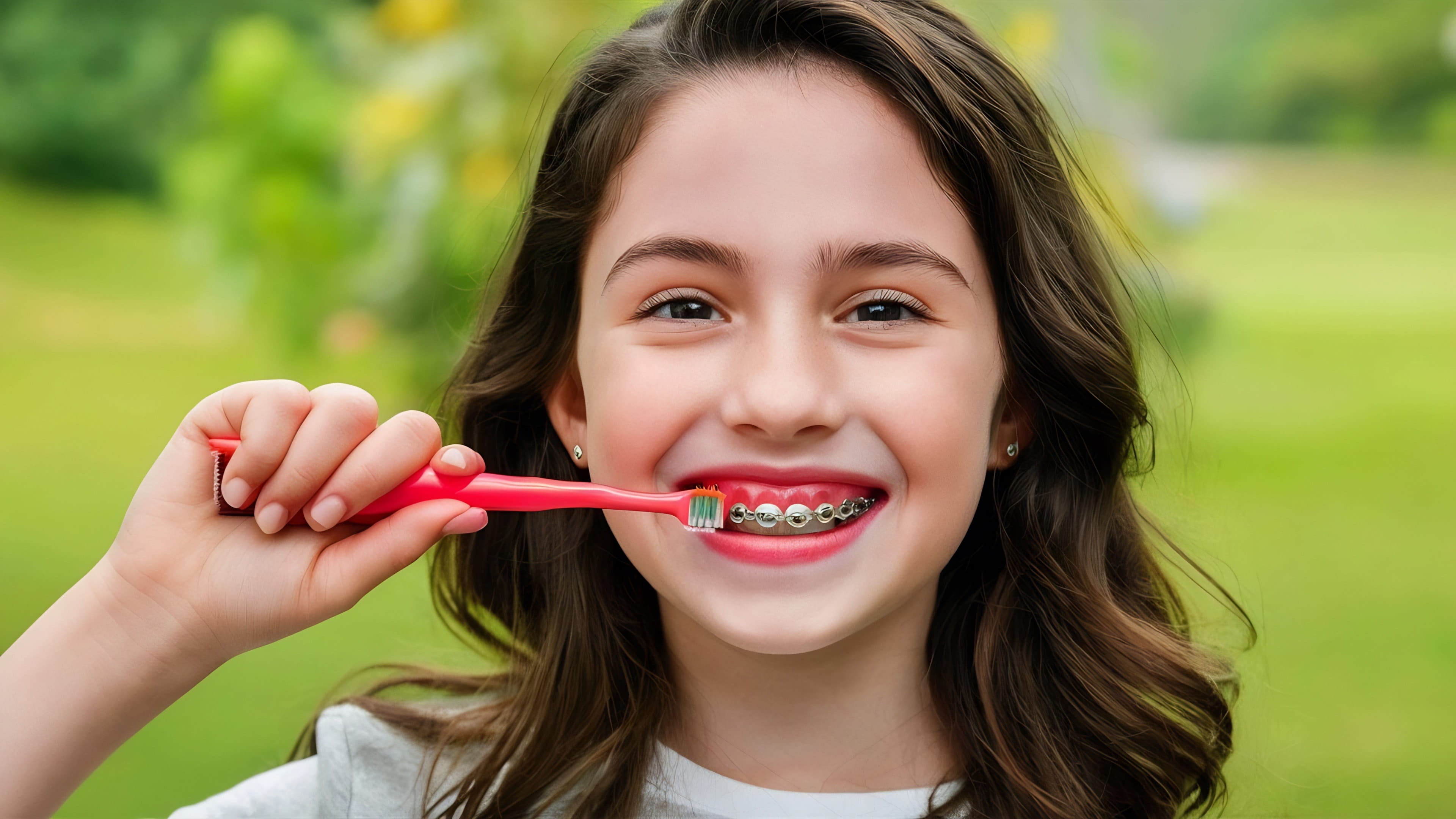
how to brush teeth with braces
Keeping your teeth clean when you wear braces takes patience. Food sticks everywhere, especially between the wires. And if you miss a few spots, those food particles may lead to tooth decay or stains that stay after your orthodontic treatment ends. It sounds tiring, but it isn’t once you get used to it. That’s how we see it anyway.
Most people think brushing twice a day is enough. But when you’re wearing braces, a quick brush won’t do. You need a little more time and attention. The idea is to clean all the necessary surfaces, wires, brackets, and your upper and lower teeth, without missing the tiny corners where plaque hides. Patients wearing braces need to brush their teeth at least 3 times per day, and brush for 2 minutes each time. Studies show that electric toothbrushes work better than manual tooth brushing.
Why Brushing Teeth with Braces Needs Extra Care
Braces catch bits of everything, rice, vegetables, snacks, even soft breads. If you don’t remove those remaining food particles, they turn sticky and form plaque. Over time, this can cause tooth decay, gum disease, or uneven whitening (decalification) of the enamel.
During orthodontic treatment, brushing helps in more ways than one. It keeps your teeth with braces fresh, your gums healthy, and your smile bright when the braces finally come off. Feels like a small effort for a big result.
Step-by-Step: How to Brush Teeth with Braces
Before you start, gather your tools. You’ll need a soft bristled toothbrush or an electric toothbrush, fluoride toothpaste, and maybe an interdental brush for between the wires. Some people also use a water flosser, especially if they find regular flossing tough.
Here’s what to do:
1. Rinse First
Swish warm water around your mouth for 20–30 seconds. This loosens loose particles and softens plaque. Rinsing makes brushing easier, especially around the brackets.
2. Position the Brush Properly
Tilt your brush at a 45-degree angle towards the gum line. Clean gently in a circular motion. It’s easy to scrub too hard but that only irritates the gums. If you have an electric toothbrush, then move it along the gumline. Brushing the area between the braces and the gums is the most important.
Spend at least two minutes actively brushing, one for the upper teeth, one for the lower teeth.
3. Clean Above and Below the Braces
Use short strokes above the wire, then below it. Focus on where the brackets touch your tooth surfaces. That’s where food particles hide most.
If you’re using an electric brush, move slowly tooth by tooth. Let the brush do the work, don’t rush. Some electric toothbrushes come with orthodontic heads made for this.
4. Focus on the Gum Line and Chewing Surfaces
Clean along the gum line where food tends to collect. Then brush your chewing surfaces too. It’s easy to forget those, but they matter.
5. Brush the Inner Sides
Flip the brush and clean the inside of your upper and lower teeth. Even though braces sit on the front, bacteria don’t care. They grow everywhere.
Flossing Teeth with Braces – Why It’s Worth It
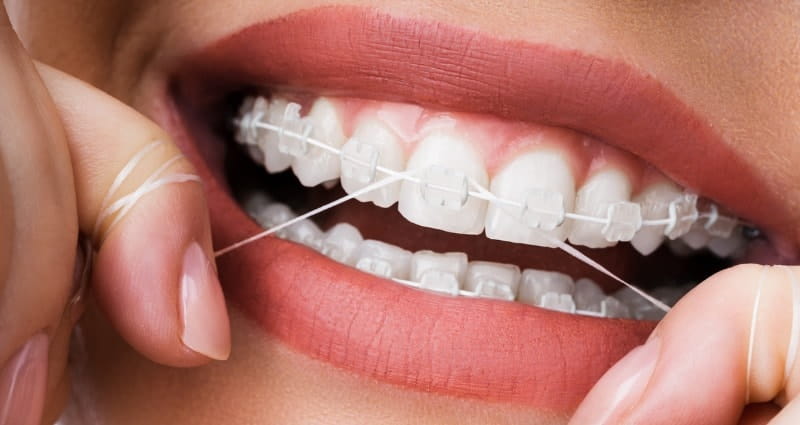
Flossing Teeth with Braces
Brushing alone won’t clean between your teeth. That’s why flossing matters, even when it’s difficult with braces. Using floss threaders, waxed floss, or unwaxed floss, you can slide gently under the wire and remove trapped food.
If that feels too tricky, try a water flosser. It uses a steady jet of water to dislodge food particles and keep the gums healthy. Some people use interdental brushes after every meal, quick and easy.
It may sound like extra work, but you’ll thank yourself later. Healthy gums mean your orthodontic treatment progresses smoothly and you’ll get that healthy smile faster.
Choosing the Right Toothpaste When You Have Braces
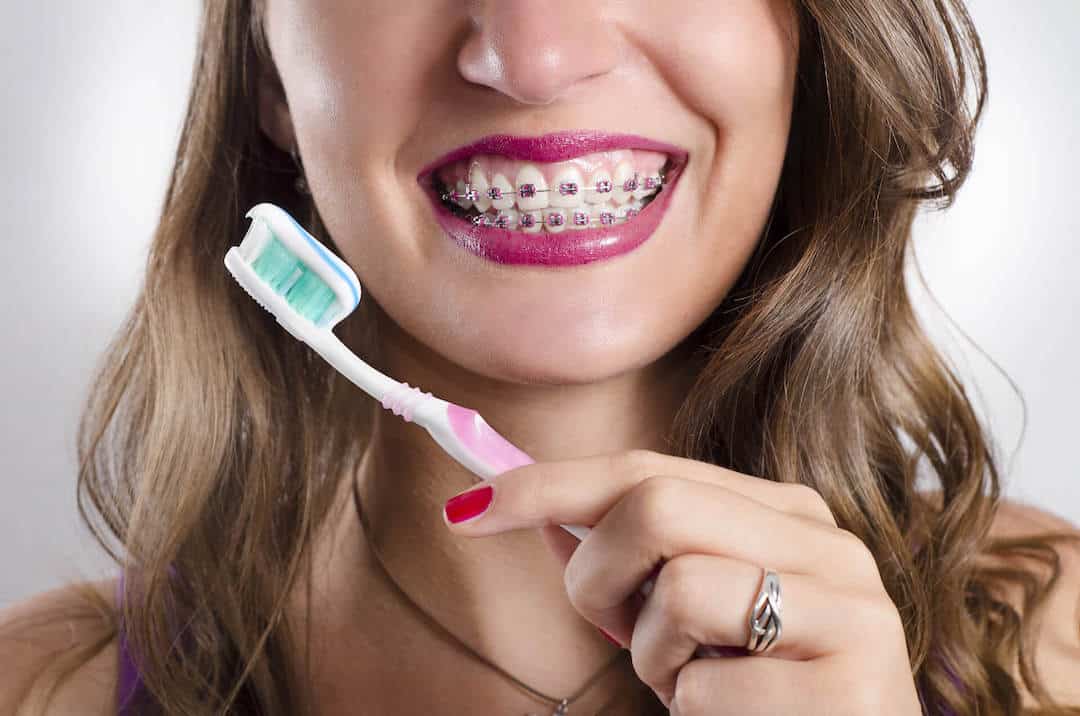
Right Toothpaste When You Have Braces
There’s a lot of confusion about fluoride toothpaste and whitening toothpaste. While fluoride strengthens enamel and prevents tooth decay, whitening types may not suit braces. The reason? You could end up with uneven whitening, bright spots where the toothpaste reached, and dull ones under the brackets.
Here’s what we recommend instead:
Use fluoride toothpaste every day.
Add a fluoride gel or fluoride liquid once a week if your dental professional suggests.
Avoid whitening toothpaste till after your braces are off.
If your teeth feel sensitive, try toothpaste meant for sensitive teeth.
Small steps, but they keep your teeth with braces strong and stain-free.
Tips for Proper Brushing Routine During Orthodontic Treatment
Maintaining a regular brushing routine keeps your mouth fresh and reduces irritation from wires. Here’s what works best:
Brush your teeth after every meal or snack, especially sticky ones. Brush at least 3 times per day.
Spend at least two minutes actively brushing.
Use an electric toothbrush because studies show they work better than manual toothbrushes.
Carry a travel toothbrush for school or work.
Always rinse thoroughly to remove remaining food particles.
You might feel awkward brushing in public at first. But after a few days, it becomes routine. That’s how habits form anyway.
What to Avoid While Wearing Braces
It’s not just about brushing; what you eat also matters. Sticky or hard foods can damage the wires and brackets, making cleaning even harder.
Avoid:
Chewy candies or caramel
Hard nuts and popcorn
Sugary drinks and sodas
Biting apples or corn directly
Stick to softer foods and rinse right after meals. It helps remove food particles before they cling to your braces.
Common Mistakes to Avoid When Brushing Teeth with Braces
Even with good intentions, small mistakes can undo your efforts. Watch out for these:
| Mistake | Why It’s a Problem | What to Do Instead |
|---|---|---|
| Brushing too hard | Damages gums and brackets | Gentle strokes, focus on coverage |
| Skipping night brushing | Plaque hardens overnight | Always brush before bed |
| Not flossing once a day | Plaque between teeth can infect the gums | Floss at least once per day |
| Not replacing brushes often | Weak cleaning | Change every 3 months |
| Forgetting under wires | Food stays trapped | Use floss threader or interdental brush |
How Long Should You Brush Teeth with Braces
For best results, brush your teeth for at least two minutes actively brushing, twice a day. If you eat sticky foods, brush for extra time.
Some dental professionals recommend brushing four times daily, after breakfast, lunch, dinner, and before bed. It may sound a lot, but it’s worth it for a healthy smile and clean teeth with braces.
If you prefer shortcuts, try combining an electric toothbrush with fluoride toothpaste. The vibration cleans deeper without too much effort.
Caring for Sensitive Teeth During Orthodontic Treatment
When you start undergoing orthodontic treatment, your teeth and gums can feel tender. Don’t panic. That’s normal.
Switch to a soft bristled toothbrush and avoid brushing too soon after tightening appointments. You can also use baking soda mixed with water as a mild rinse to calm sensitivity.
If soreness continues, your dental professional might suggest fluoride gel or medicated toothpaste for sensitive teeth. Be gentle, aggressive brushing won’t make teeth cleaner, just more sore.
Final Thoughts
Learning how to brush teeth with braces isn’t complicated. It just needs attention and a few good habits. Use the right brush, take your time, and keep your mouth clean. Remember, you’re not only caring for your braces, you’re protecting your future smile.
If you ever feel unsure about your brushing method, ask your orthodontic team during your next visit at Dr Dante Gonzales Orthodontics. We'll guide you personally and help refine your tooth brushing routine.
A clean mouth makes a healthy smile, and when the braces come off, you’ll see how every extra minute of brushing paid off. Feels good when effort shows.